



Organisation
Dunsters Farm
Sector
Agriculture & Food
Knowledge base
Manchester Metropolitan University
Share this article


Challenge
Dunsters Farm is a family-owned, third-generation food wholesaler headquartered in Bury, Greater Manchester. Founded in 1963 as a small milk delivery service, the company now supplies frozen, chilled, and ambient food and beverages to schools, hospitals, cafes, hotels, and restaurants across Northern England. In 2024, Dunsters Farm reported a turnover of £32 million, employed 140 staff, and operated a fleet of 55 vehicles fulfilling over 47,000 orders per year.
The food distribution sector faces increasing pressure from large corporate competitors and public sector procurement policies demanding measurable sustainability and social value commitments. Dunsters Farm required a structured approach to sustainability, operational efficiency, and digital transformation to remain competitive and meet evolving market expectations.
Through a Knowledge Transfer Partnership with Manchester Metropolitan University, the company sought to:
- develop a framework to track, measure, and reduce carbon emissions to align with UK Net Zero targets
- establish standardised tools to monitor and report social impact, ensuring compliance with public sector contracts
- integrate modern technology into operations to improve efficiency and agility
- innovate the business model to respond quickly to market shifts while maintaining profitability
Creating a Meaningful Evaluation Framework
The partnership implemented digital and operational tools to support sustainability and social value initiatives. Dynamic routing software, data-driven decision frameworks, and operational experiments were introduced to optimise efficiency and reduce carbon emissions. Collaborative workshops and training built internal capability in ESG reporting, carbon literacy, and innovation practices.
Manchester Metropolitan University applied research in real-world business settings, developing a framework for Social Value and Relational Resilience in SMEs. Postgraduate projects and case studies were integrated into teaching, and findings were presented at international conferences to demonstrate practical impact.
Outcome
The KTP delivered transformational results across Dunsters Farm:
Operational efficiency and digital transformation
The company adopted technology-driven processes, including dynamic routing and new operational systems, reducing delivery miles by 15% and improving decision-making across the business.
Commercial impact
Dunsters Farm secured a £42 million public sector contract spanning six to nine years, representing 35% of turnover. This required the recruitment of 20 new staff members, the purchase of 10 vehicles, and the delivery to 300 new sites. Overall turnover and long-term profitability have been strengthened.
Environmental and social benefits
Carbon intensity fell by 15.2%, and plastic packaging was reduced by 71% in 2022 and a further 60% in 2023. Social value initiatives exceeded targets by 176%, generating £5 million in value, supporting 14 local charities, delivering 216 volunteer hours, and creating five apprenticeships.
Innovation and process development
The KTP established Dunsters Farm as a pioneer in sustainable food distribution, creating frameworks and tools that enable measurable ESG outcomes and scalable innovation.
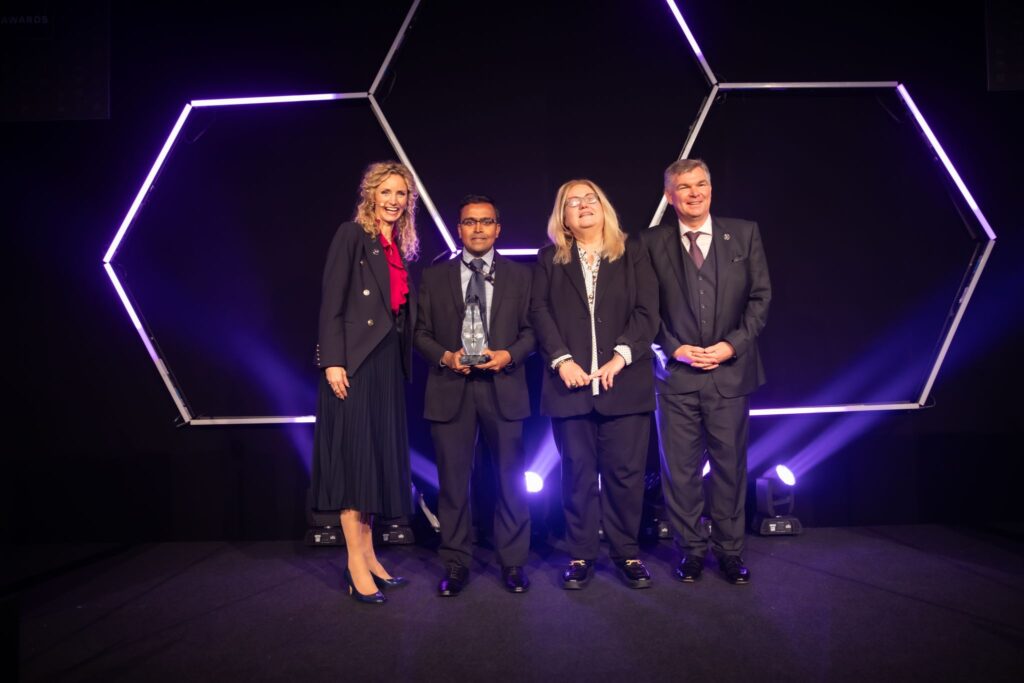
These achievements led to Dunsters Farm being awarded the Changing the World Award at the 2025 KTP Awards, recognising the project’s significant social, environmental, and commercial impact.
Impact
The partnership has reshaped Dunsters Farm’s operational and cultural approach to sustainability and social value. Staff have gained carbon literacy training and practical skills in innovation and ESG reporting. The business now serves as a model for family-owned SMEs seeking to integrate sustainability into core operations while achieving growth and profitability.
For Manchester Metropolitan University, the project generated new research outputs, enhanced teaching materials, created postgraduate projects, and strengthened knowledge exchange with industry. The framework developed through this KTP informs regional policy and supports further collaborations with SMEs on sustainability initiatives.
What they say
“It has been incredibly rewarding to see us not only meet but far exceed our targets. We delivered over £5 million in social value, secured a six-year contract worth more than £40 million, and won it based on our strong social value commitments and results.”
Share this article